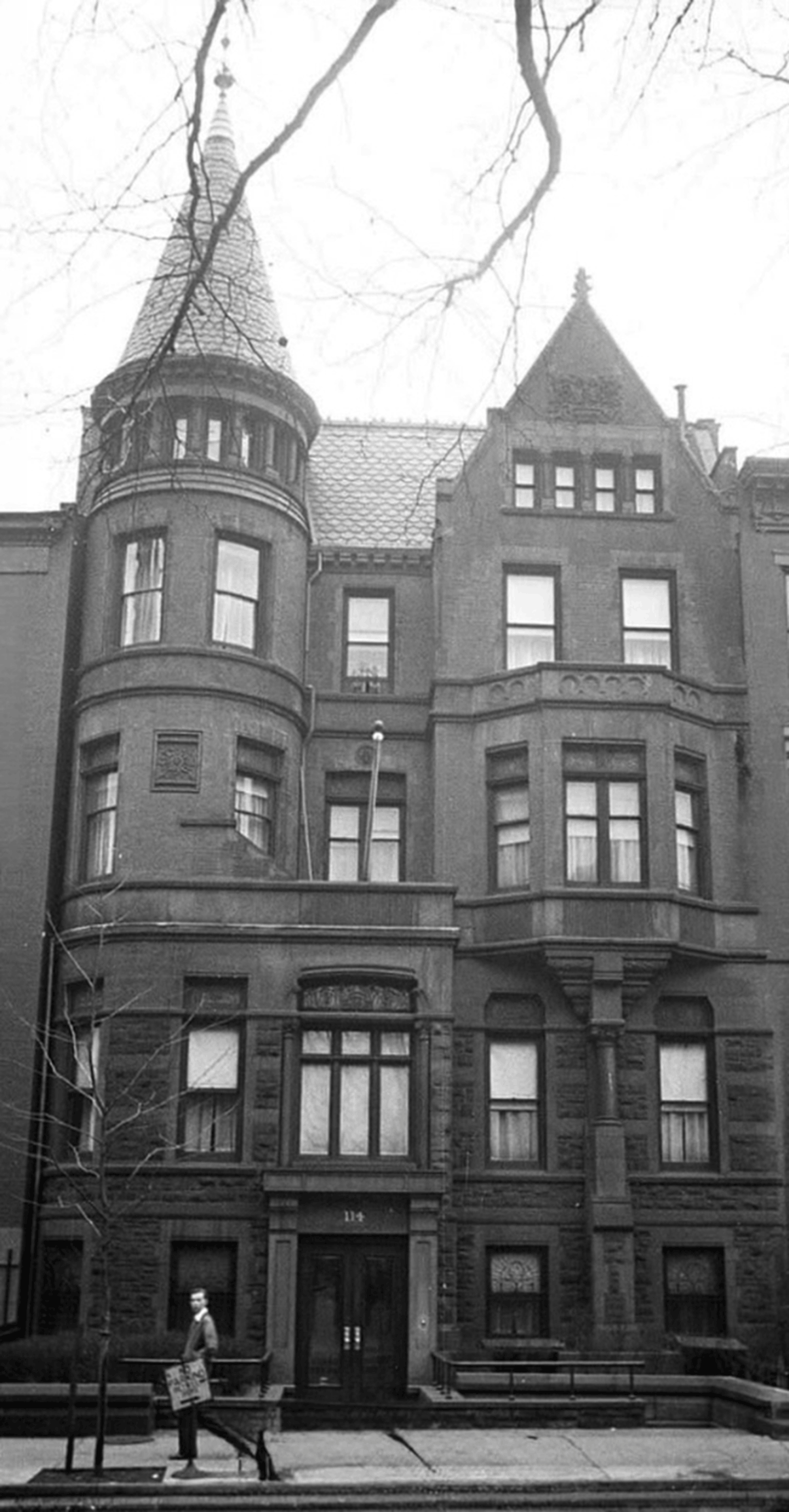
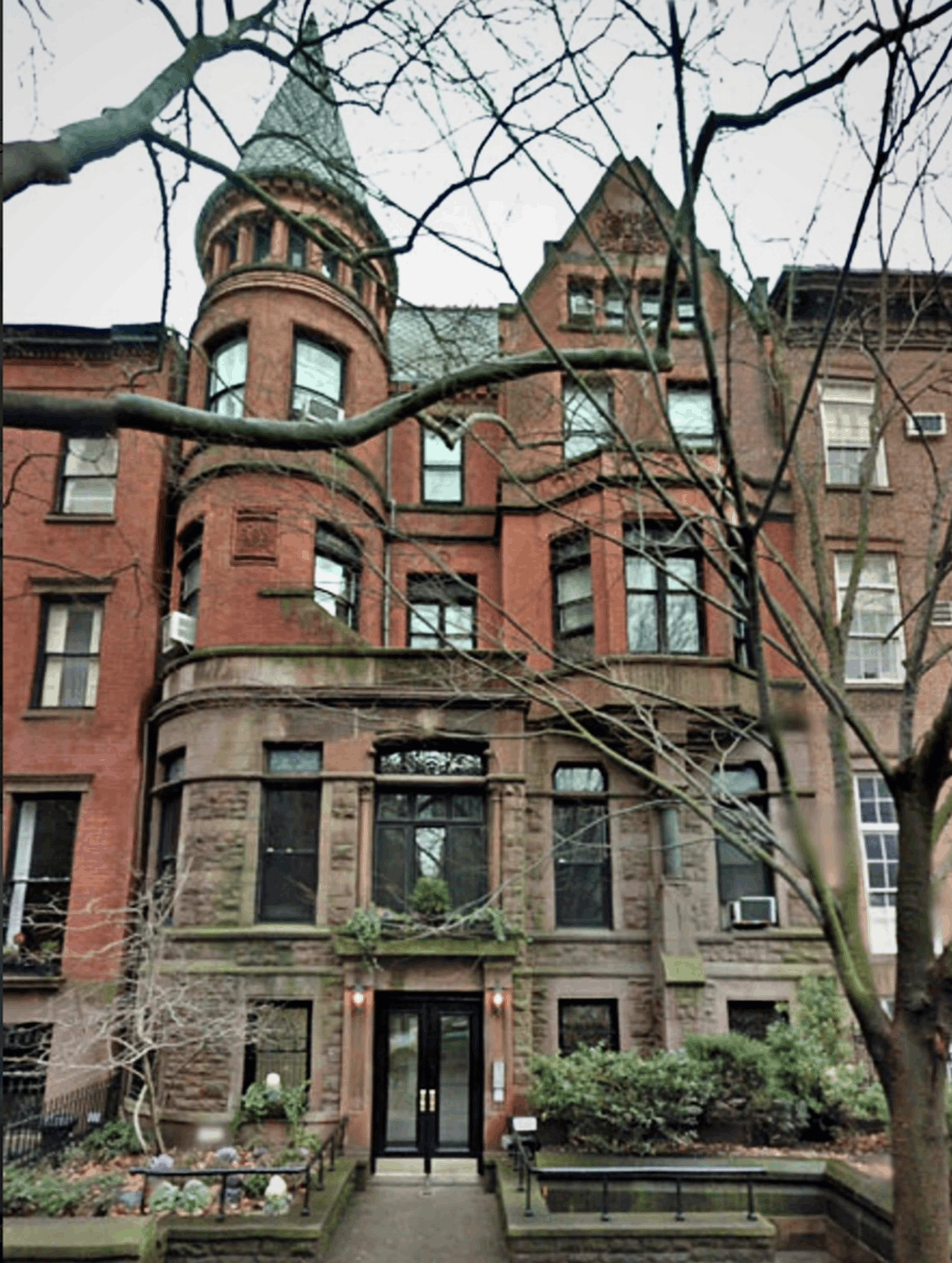
Brooklyn, New York
Victorian Conversion
Rationalizing the floor plan and decorating a white box triplex within a historic house which had been stripped of all historic architectural detail.
BRIEF
A rare opportunity to have three floors of a historic Brooklyn mansion presented aesthetic and programmatic challenges for a couple with two young boys and a live-in nanny.
The existing layout consisted of an open plan living space, three bedrooms and awkward public rooms undefined public spaces. The wife working from home with her young children and a nanny was challenged by a limited storage, no privacy and a series of soulless white rooms.
The clients wanted a state-of-the-art kitchen in a small space. Maximizing natural light was an essential requirement, but the landmarked building would not allow changes to the fenestration.
Visual communication between public rooms and the ability to close them off was necessary to create separate spaces for the different members of the family and their lifestyle.
The existing bedroom spaces needed to accommodate the family and nanny with rooms incorporating versatile storage solutions and doing double time due to the limited square footage.
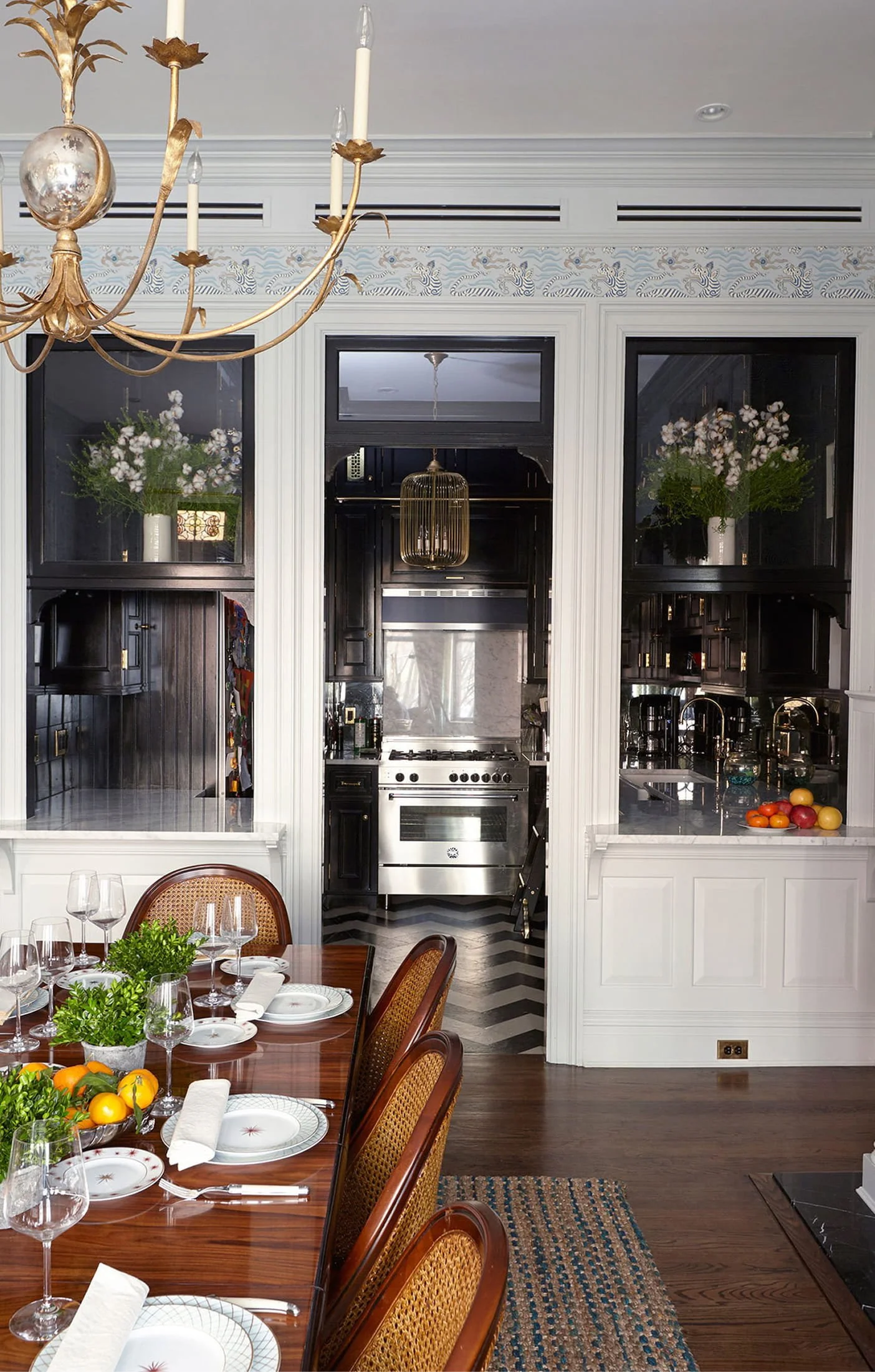
A range of playful wallpapers on a light ground added a touch of fun across the property.
DESIGN
The family, a repeat client, entrusted the designers with the reimagining of their new home for a new stage in their lives.
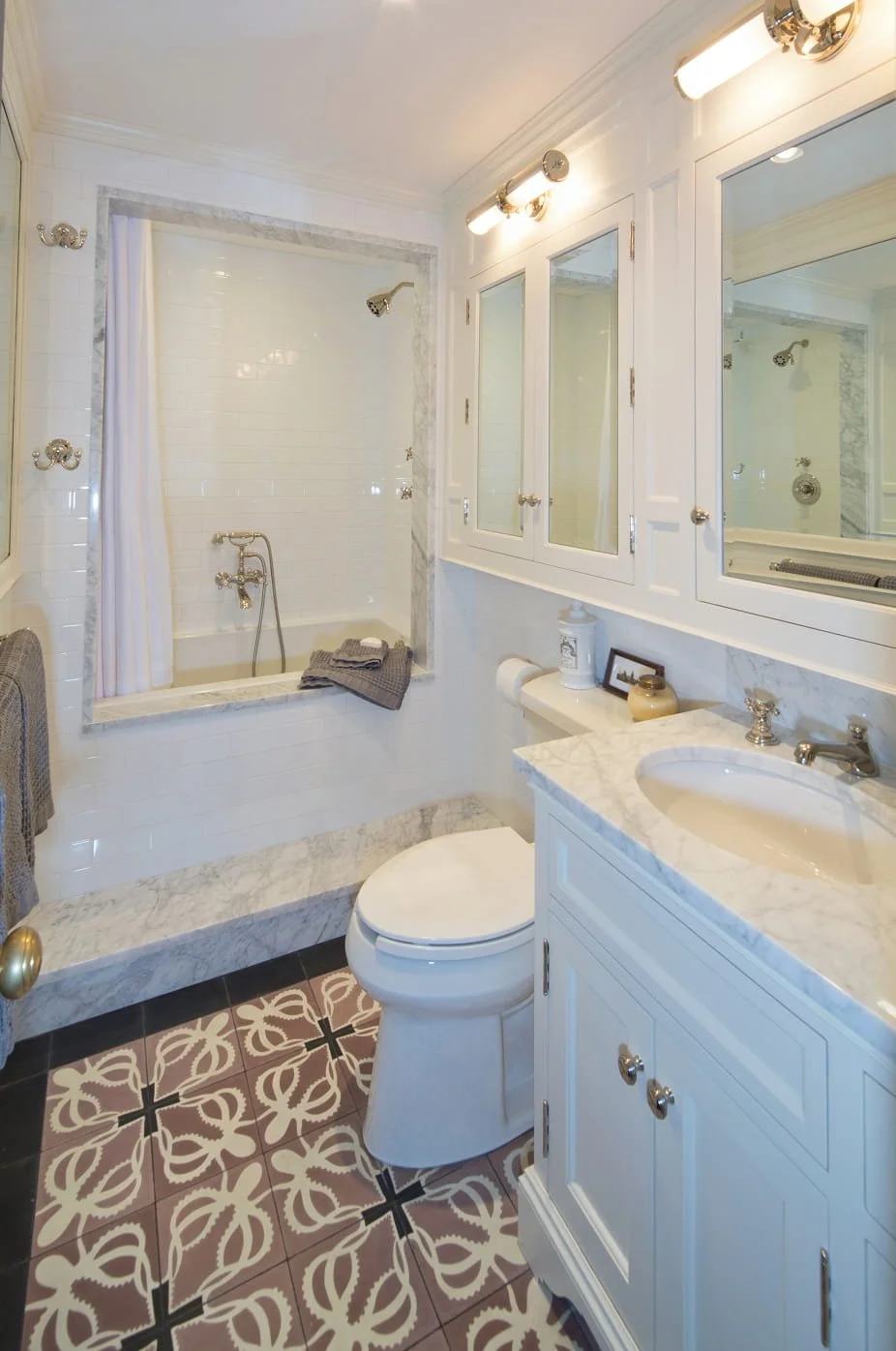
The palette of colors included high-gloss black, navy and cadette blue as well as pink tinted white paint that increases the sense of light. A range of playful wallpapers on a light ground added a touch of fun across the property. The wallcoverings allowed the designers to warm up and create interest in spaces that could otherwise feel small and stark. Traditional materials included waxed cork flooring in the kitchen which has noise-deadening properties, encaustic tile in the bathrooms and high gloss paint which increased the luminosity of the interiors.
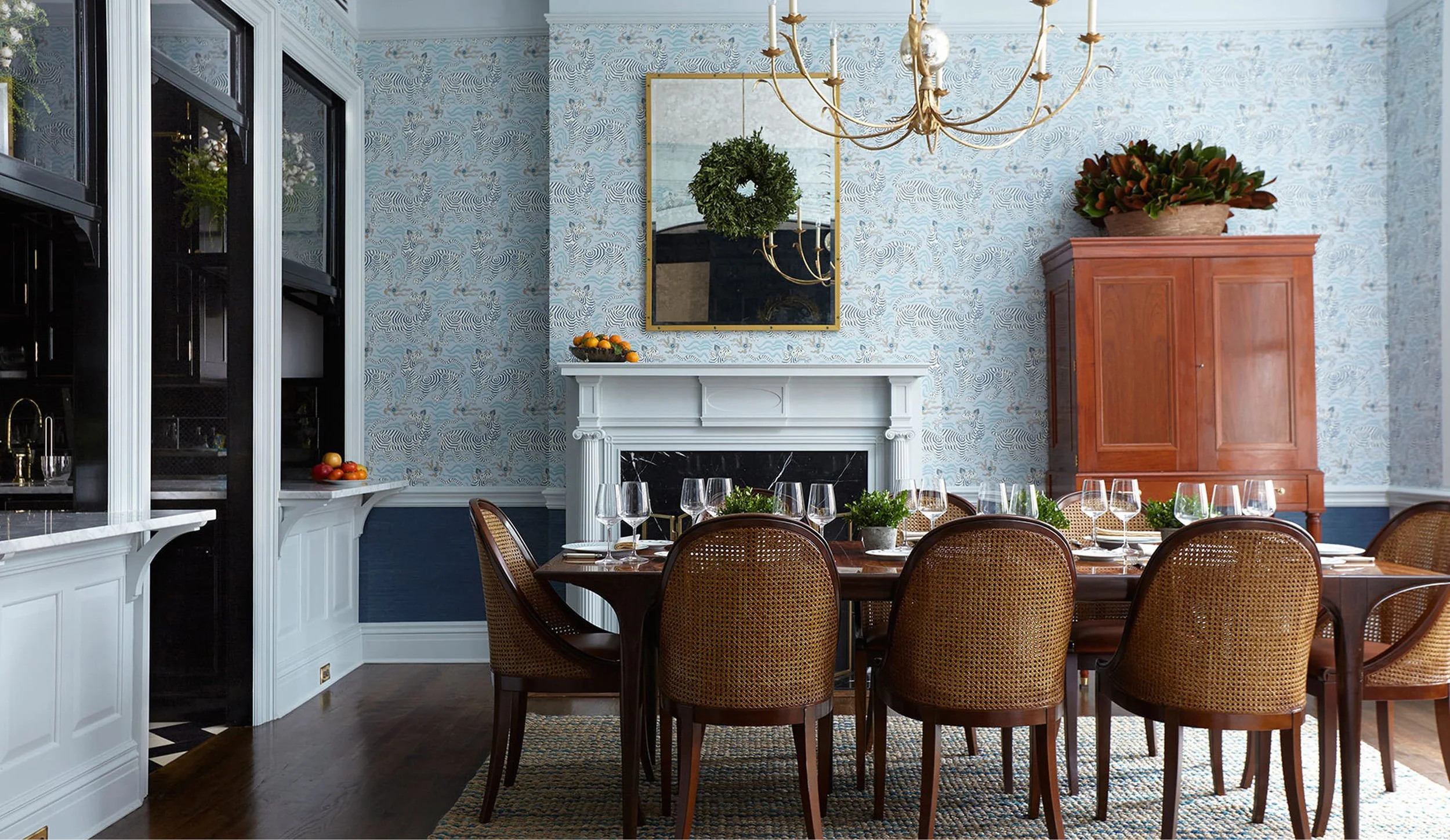
The studio reintroduced divisions between all the public rooms, restored some of the existing historic flooring which remained, and brought in salvaged elements including a New England sourced painted Edwardian mantle for the dining room.
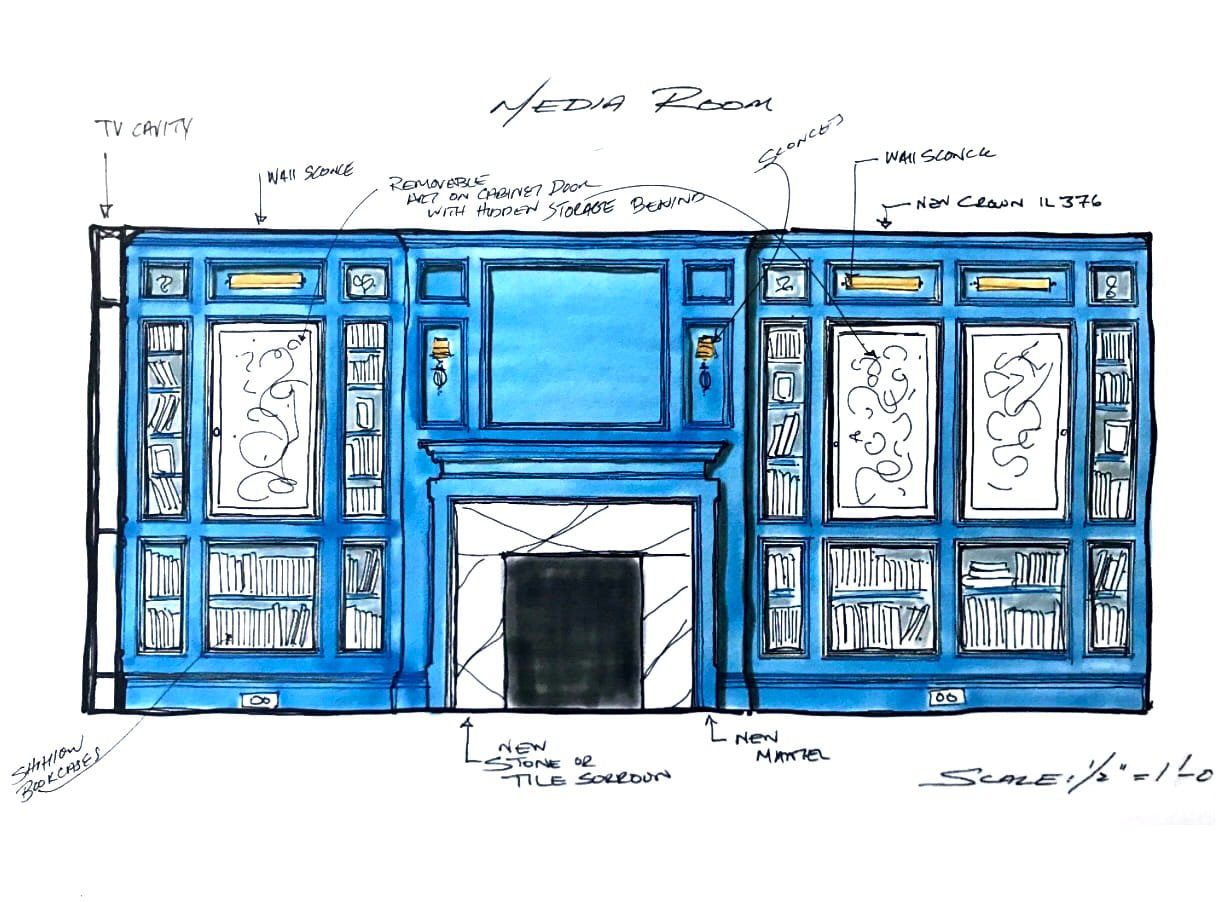
The living room incorporates the building’s corner turret. Paneling was designed to give visual weight to the walls. The panel also hides a large television at the husband’s request. A comfortable seating area includes a custom sofa and an ottoman made from an antique rug purchased on an international buying trip. The rug woven to fit the room incorporates shades of blue, red, and cream to tie different elements of the interior together. Art highlights the work of local Brooklyn artists.
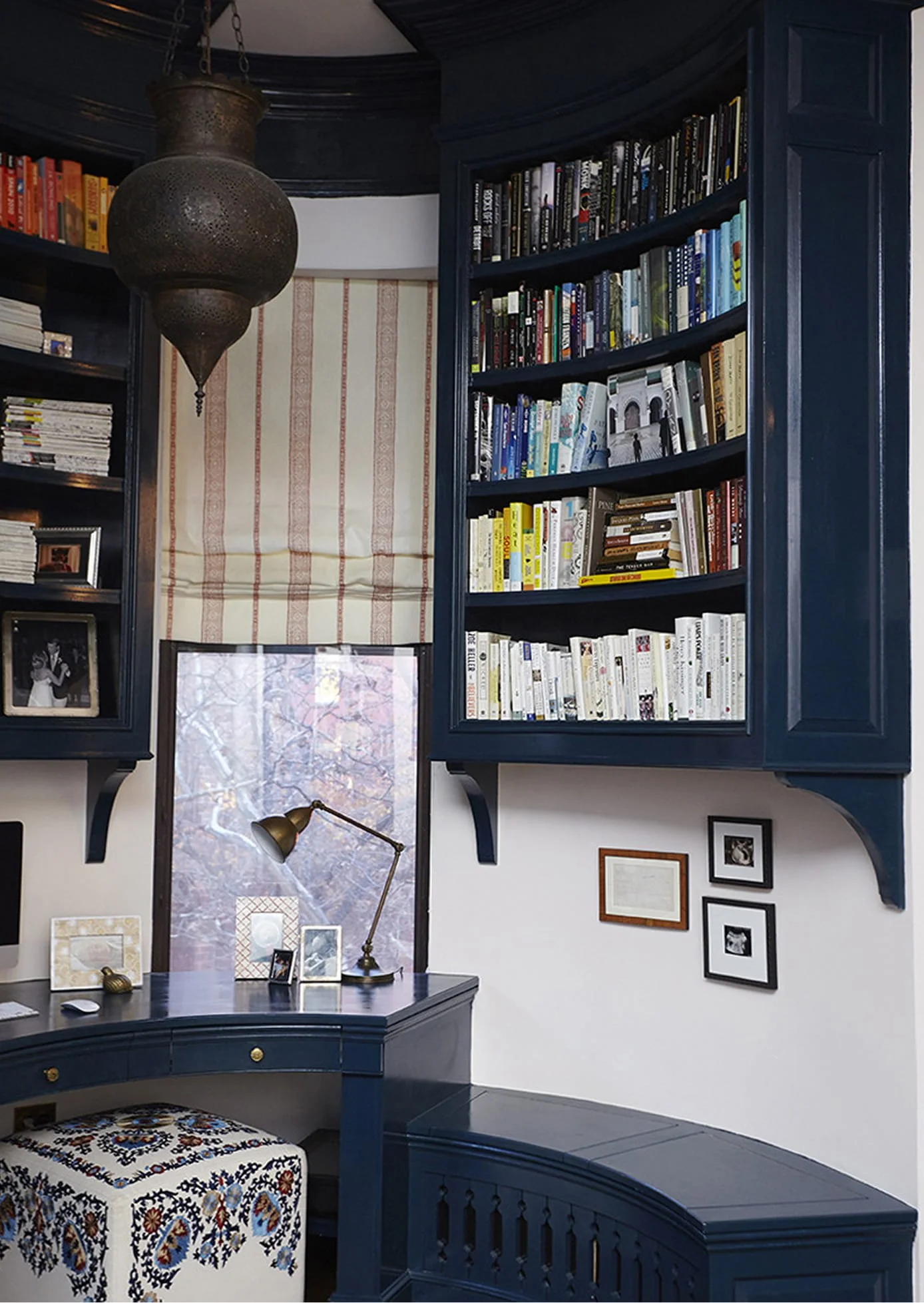
A home office in the living room turret fitted with bespoke curved shelving and desk gave the client a workspace that felt contained, but was still within eyesight of the comings and goings of the family.
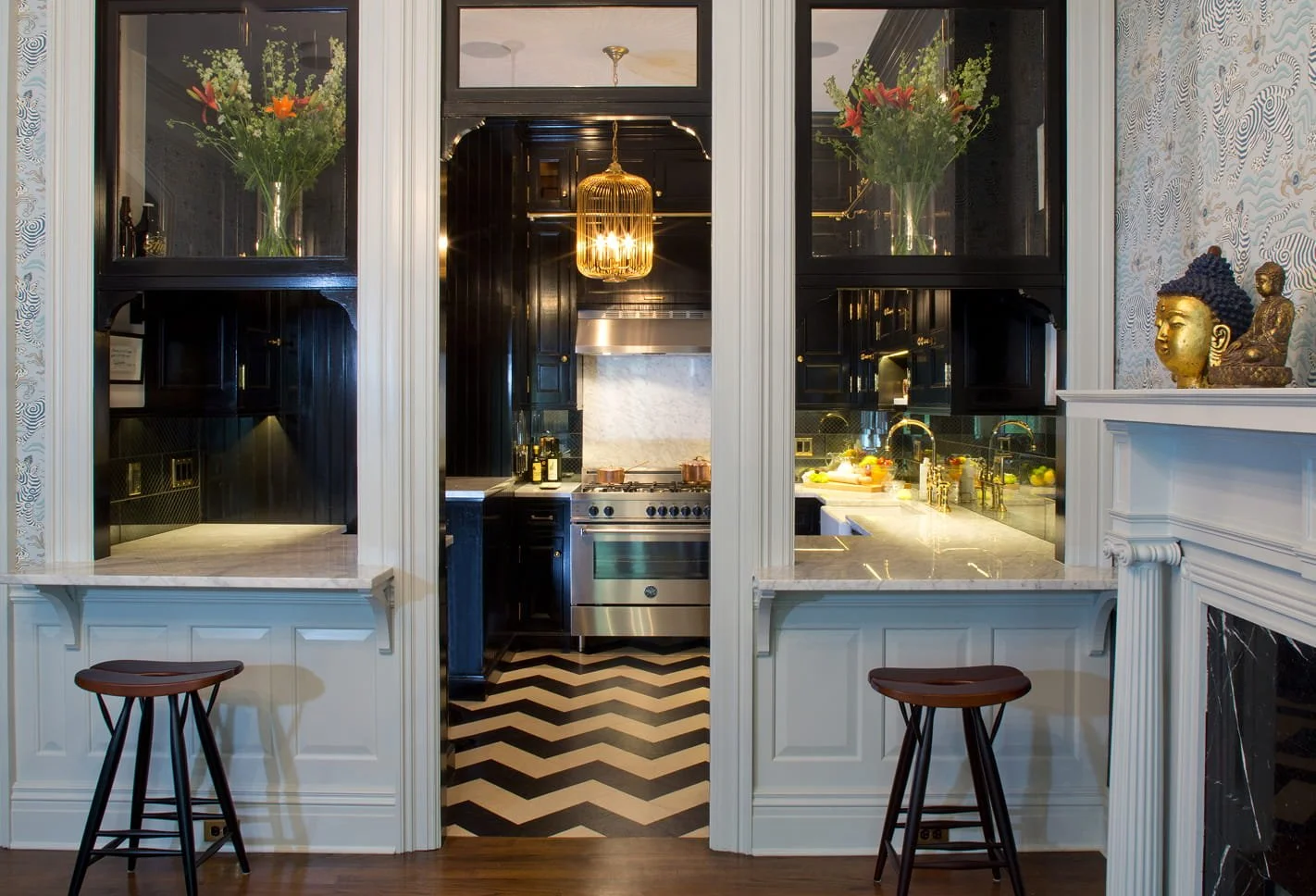
Between the kitchen and dining room the designers installed a glass division, an idea borrowed from Victorian service spaces, to create a visual separation between the two rooms. This provided a distinct service space and a separate dining area. The free-standing cabinet designed by David Nastasi next to the fireplace hides an elaborately detailed cocktail cabinet.
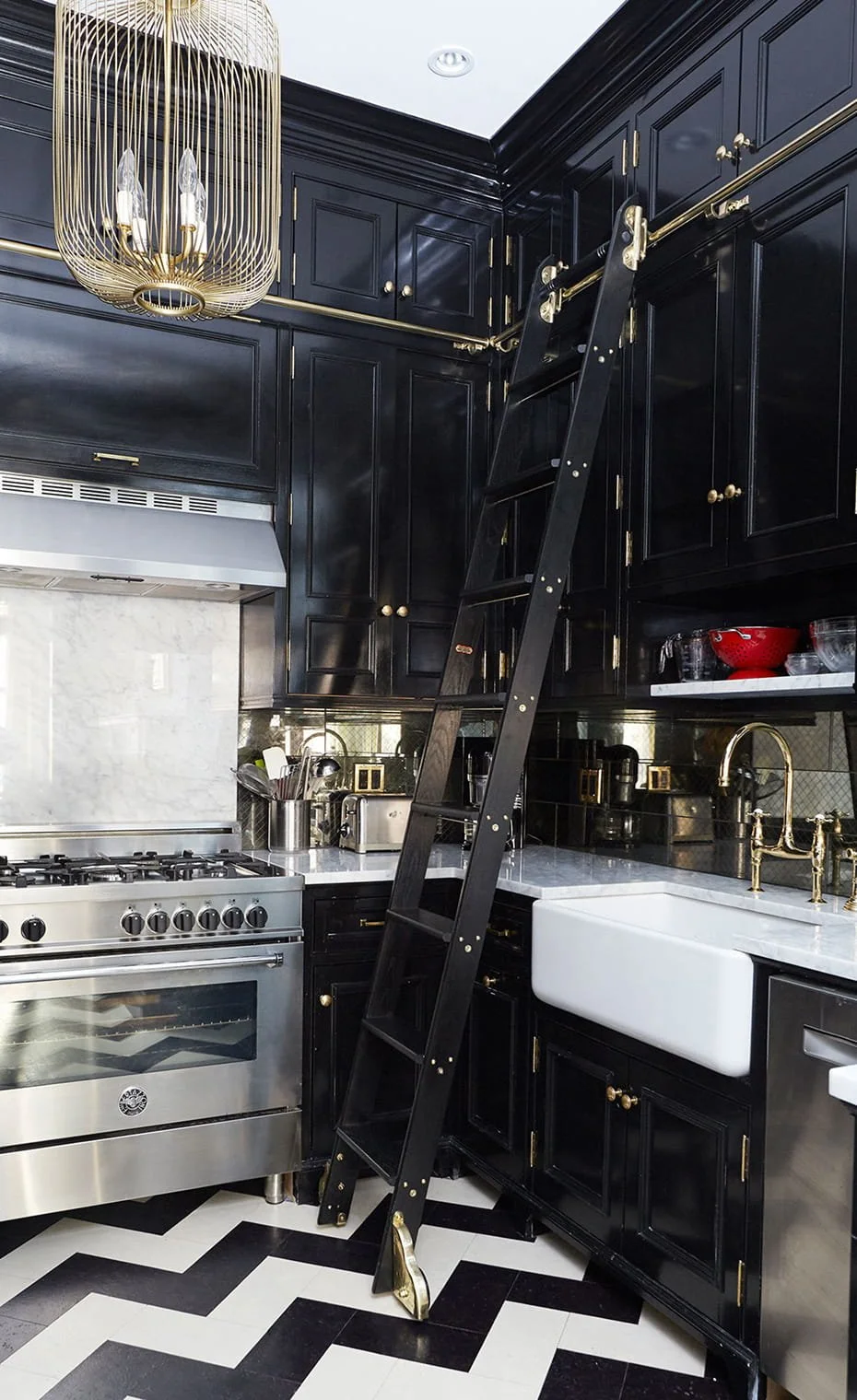
The kitchen seemed impossibly small when faced with the clients’ need for copious storage and a well-appointed preparation space. In order to house all the family’s china and cooking equipment the full 13 feet height of the room was used for cabinetry and to hide mechanical systems. A custom-made ladder and rail system allows for easy access to the higher shelving. The kitchen incorporates a wine fridge, fridge/freezer, dishwasher, stainless range plus a deep wide sink. Reflective materials like a mirrored backsplash made sense in this specific context to enhance light.
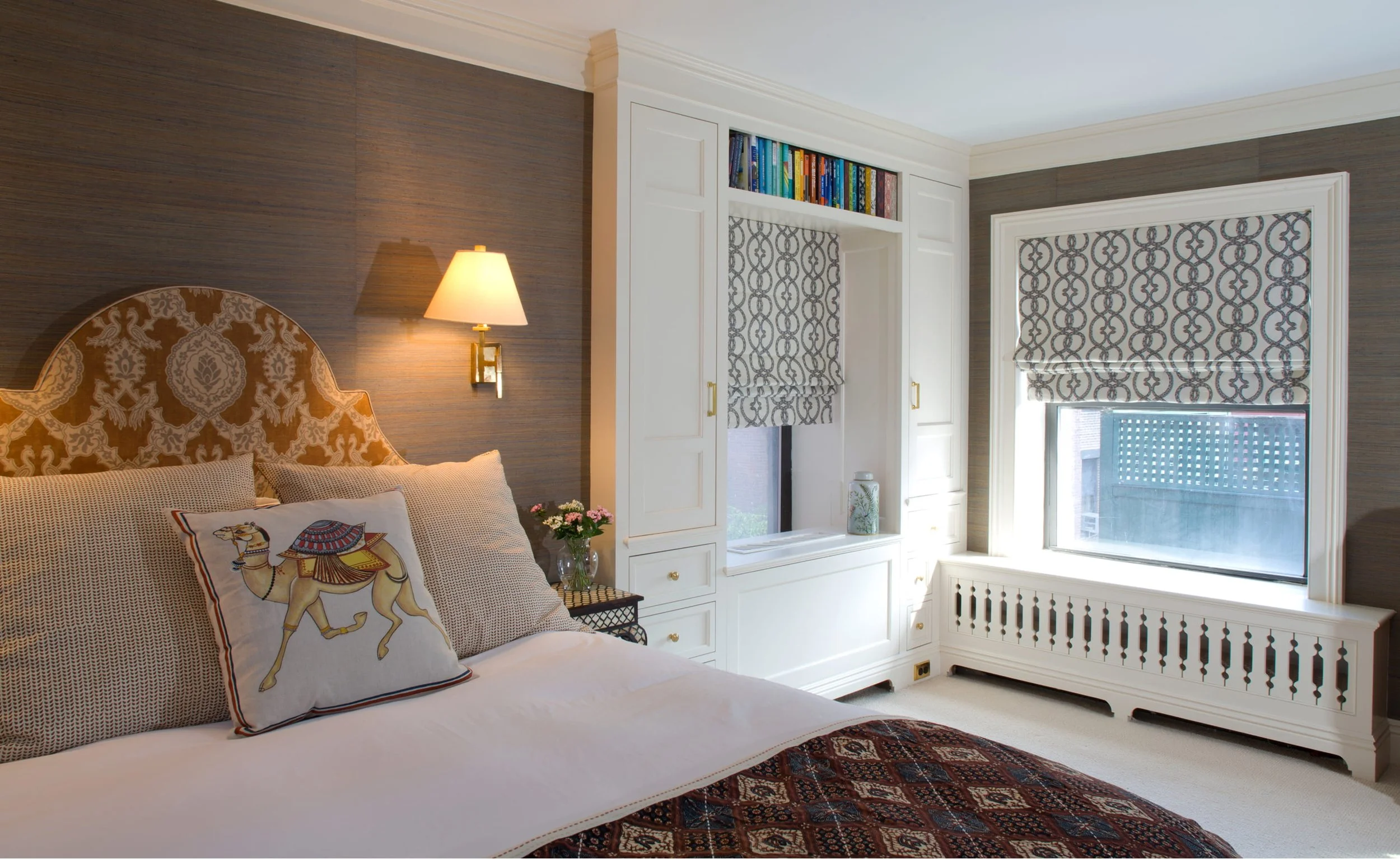
In the master bedroom, wall to wall carpeting reduces noise. Light trim and dark walls were specified for coziness and to contrast with the public rooms creating a comfortable sanctuary. In this instance, because there is so much woodwork in a light colour, the designers warmed it up with bronze and blue-gray grasscloth. Given the minimal square footage most of the furniture is built in. The concept was to create the storage of an independent dressing room that disappears behind beautiful cabinetry. The custom upholstered queen-size bed rests against a chimney breast and the recessed sides were used for additional storage.
Throughout the apartment the designers created strong architectural spaces that come to life via reimagined details restoring the best of the Victorian period while being eminently suited to modern family life.