Maine Island Restaurant
A destination restaurant on a Maine island, housed within a landmark former military building.
BRIEF
The client, an award-winning hospitality entrepreneur, sought to create a restaurant experience unique to Maine, offering thoughtful seasonal dining in a fun, stylish setting designed for both year-round residents as for visitors.
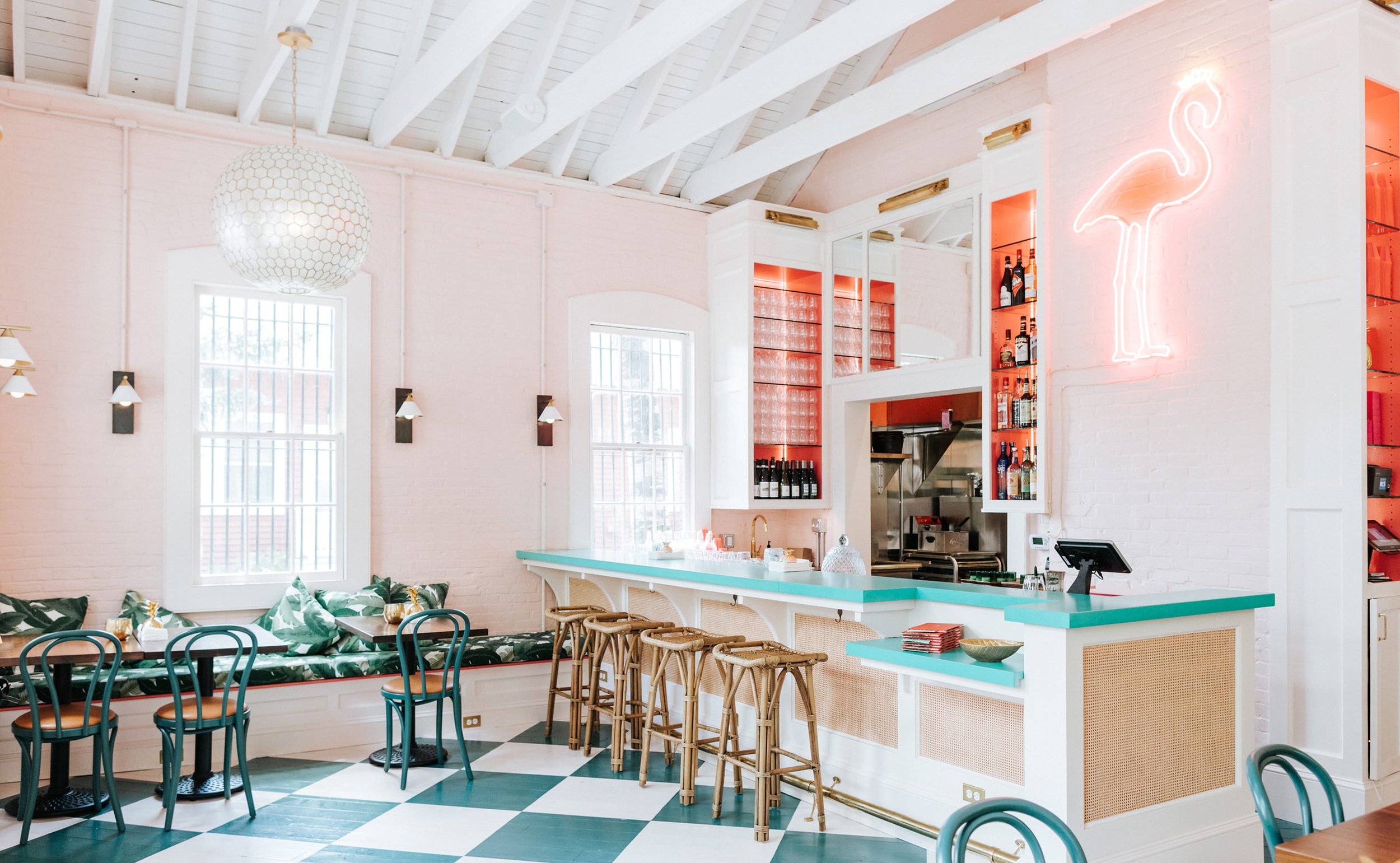
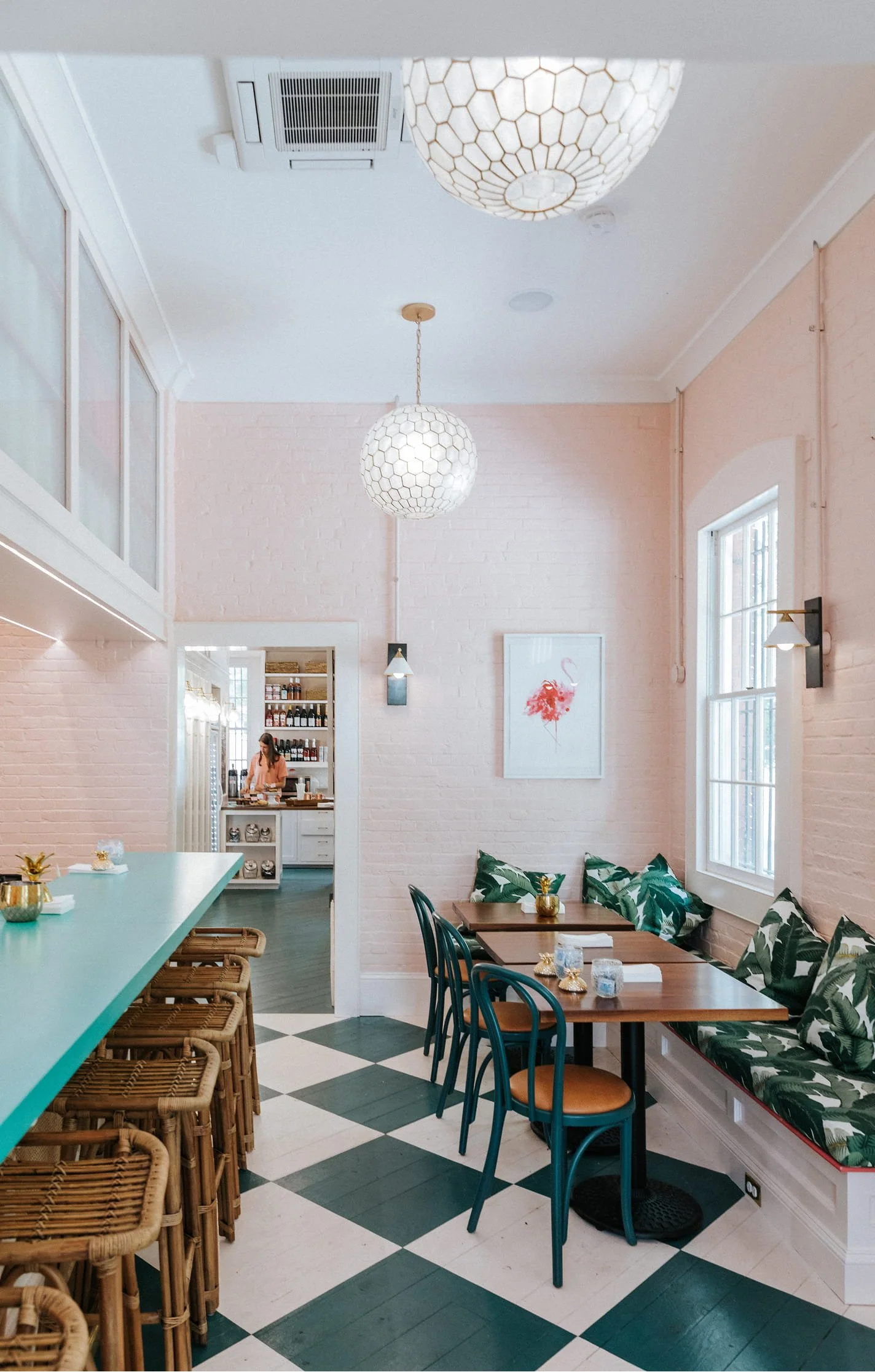
The design directive sought to evoke a 1950s Floridian, or British Caribbean, beach vibe with a global inflection that went beyond the local coastal sensibility. The key challenge was to conceive and deliver something special: bright, sunny, and stimulating, an atmosphere that would feel wholly unexpected in Maine.
A historic military building, most recently used as a general store, needed to be redesigned with the lightest possible structural touch. While changes to the existing interior were strictly limited, the brief required maximizing allowable seating, creating a highly efficient commercial kitchen, and meeting all accessibility requirements mandated by law.
The building also called for improved lighting and a carefully calibrated atmosphere capable of transporting guests to a warmer, more relaxed part of the world.
Materials and finishes were specified for durability, able to withstand humid, salt-laden summers and harsh winters.
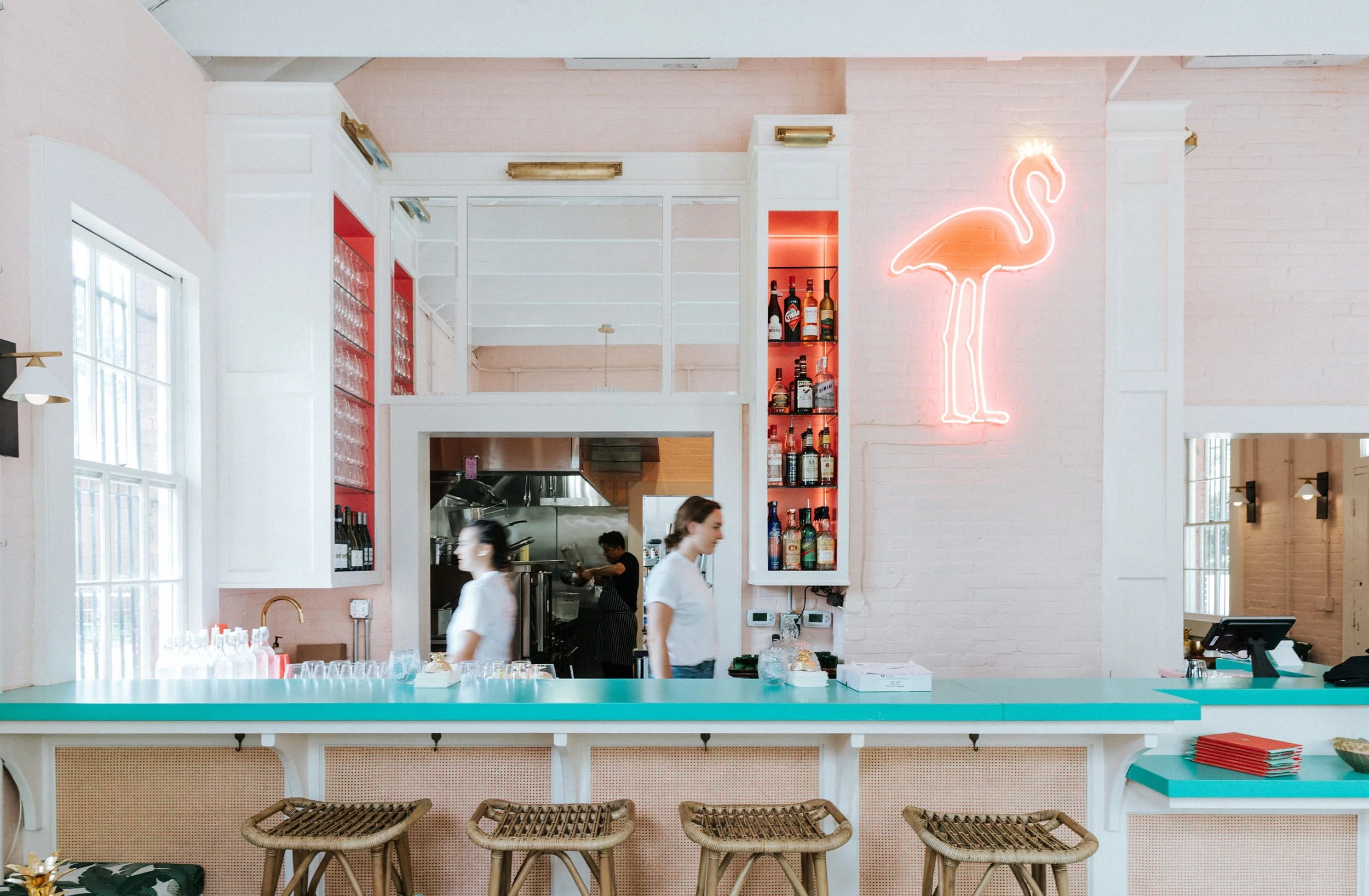
To create an interior that feels bright and uplifting by day, yet warm and intimate by night, the color scheme incorporates pinks and deep rose hues as accents, with teal used as a lively counterpoint. Pink, a surprisingly versatile color, responds beautifully to shifting light conditions appearing joyful and vibrant in daylight, then warm, flattering, and cocooning by candlelight. The palette was conceived as a central part of the overall concept, designed to perform against Maine’s ever-changing weather.
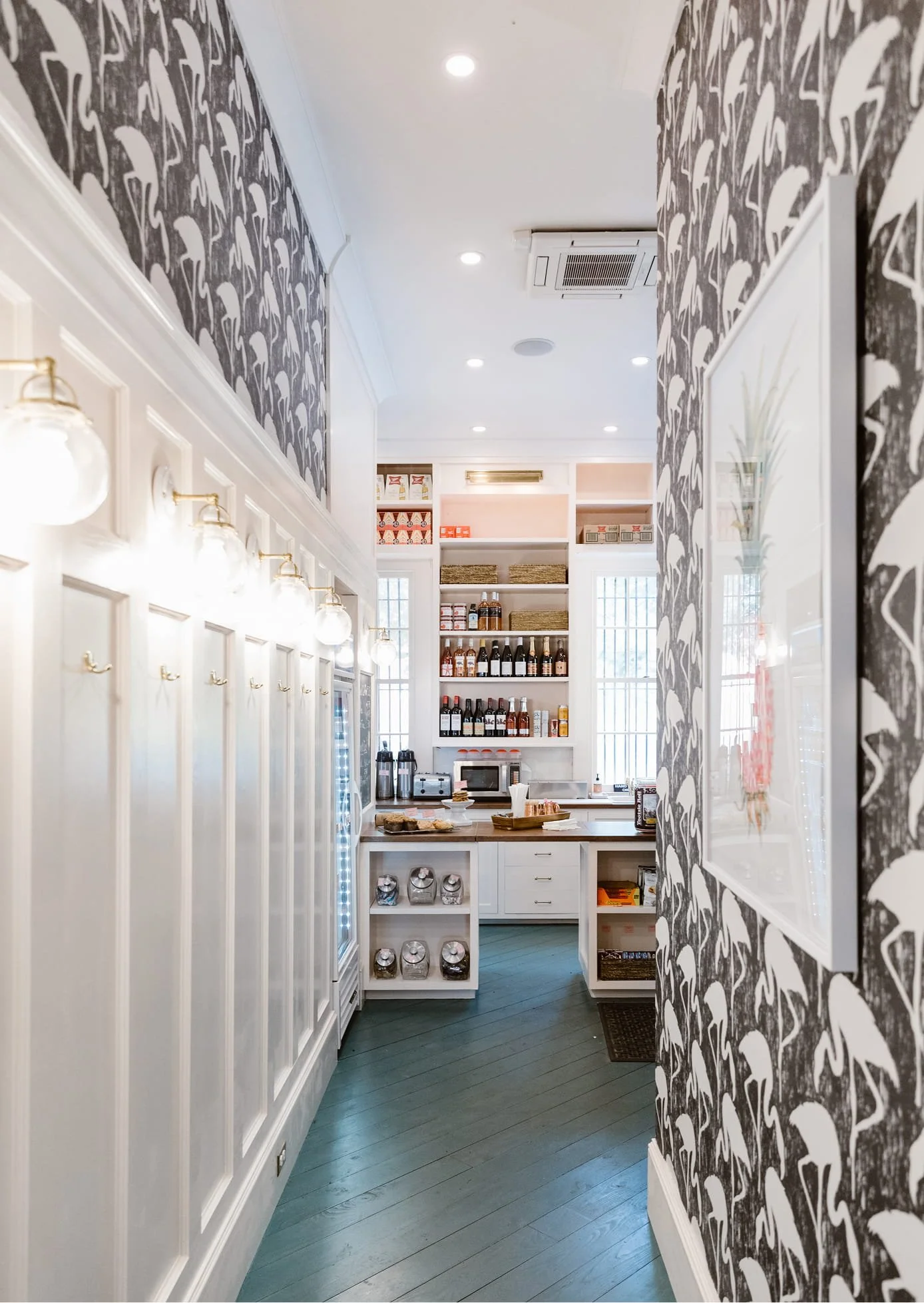
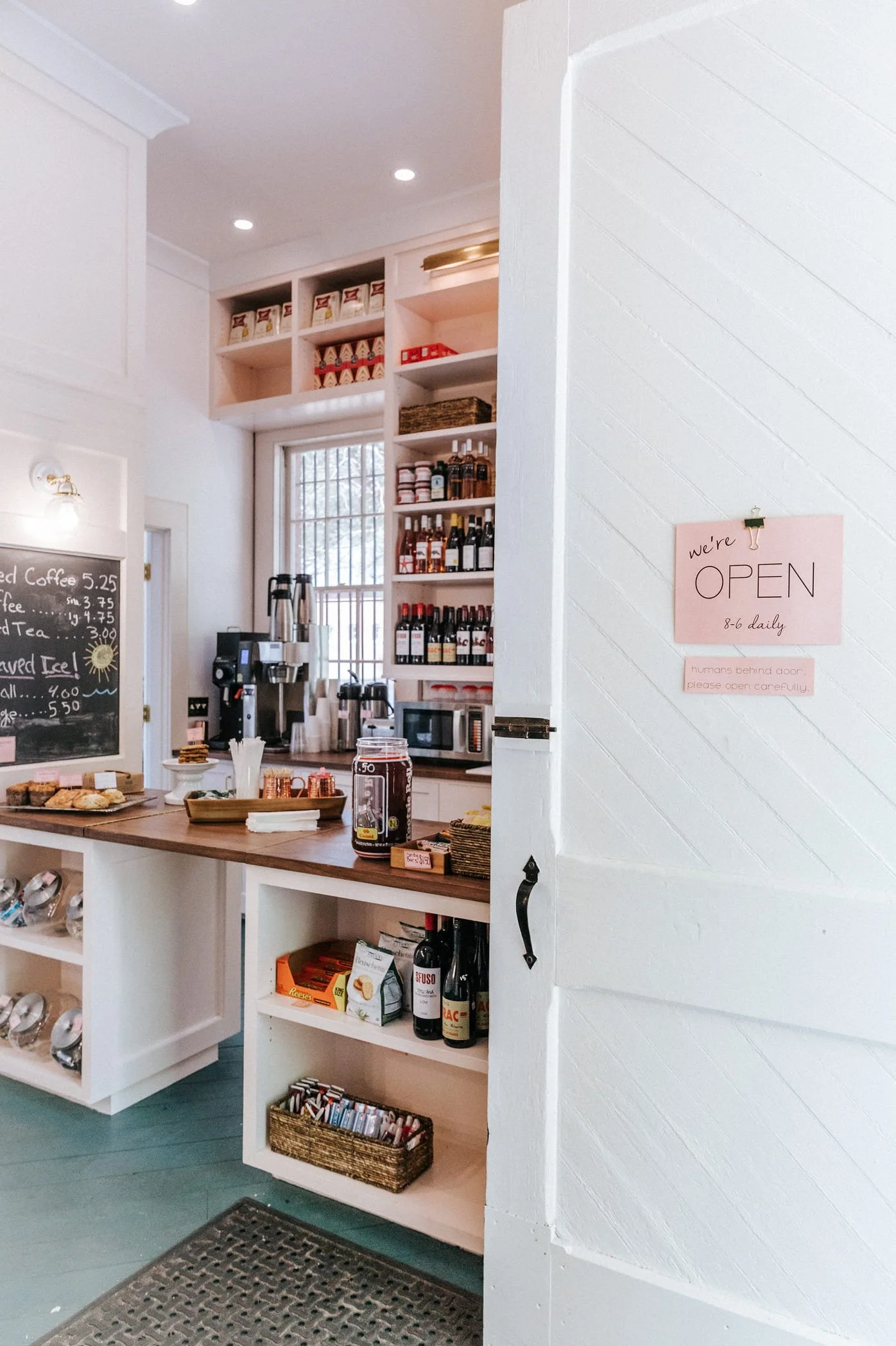
To overcome the physical constraints of the compact interior, mirrors and glass were introduced to enhance light and a sense of openness. A bespoke storage unit designed by the studio incorporates frosted glass panels, allowing light to filter from the main dining room into the kitchen beyond.
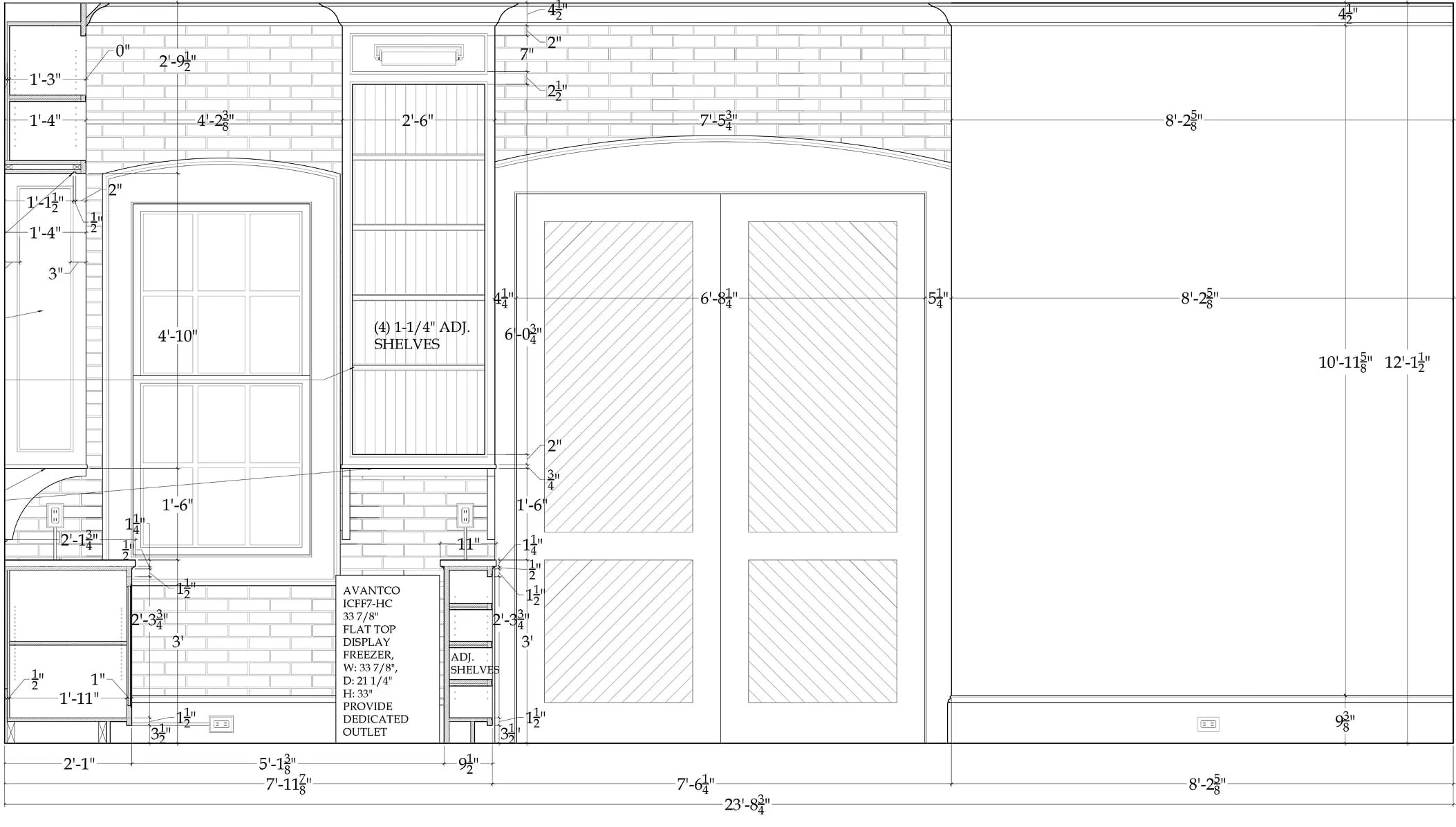
Pink, a surprisingly versatile color, responds beautifully to shifting light conditions—appearing joyful and vibrant in daylight, then warm, flattering, and cocooning by candlelight.
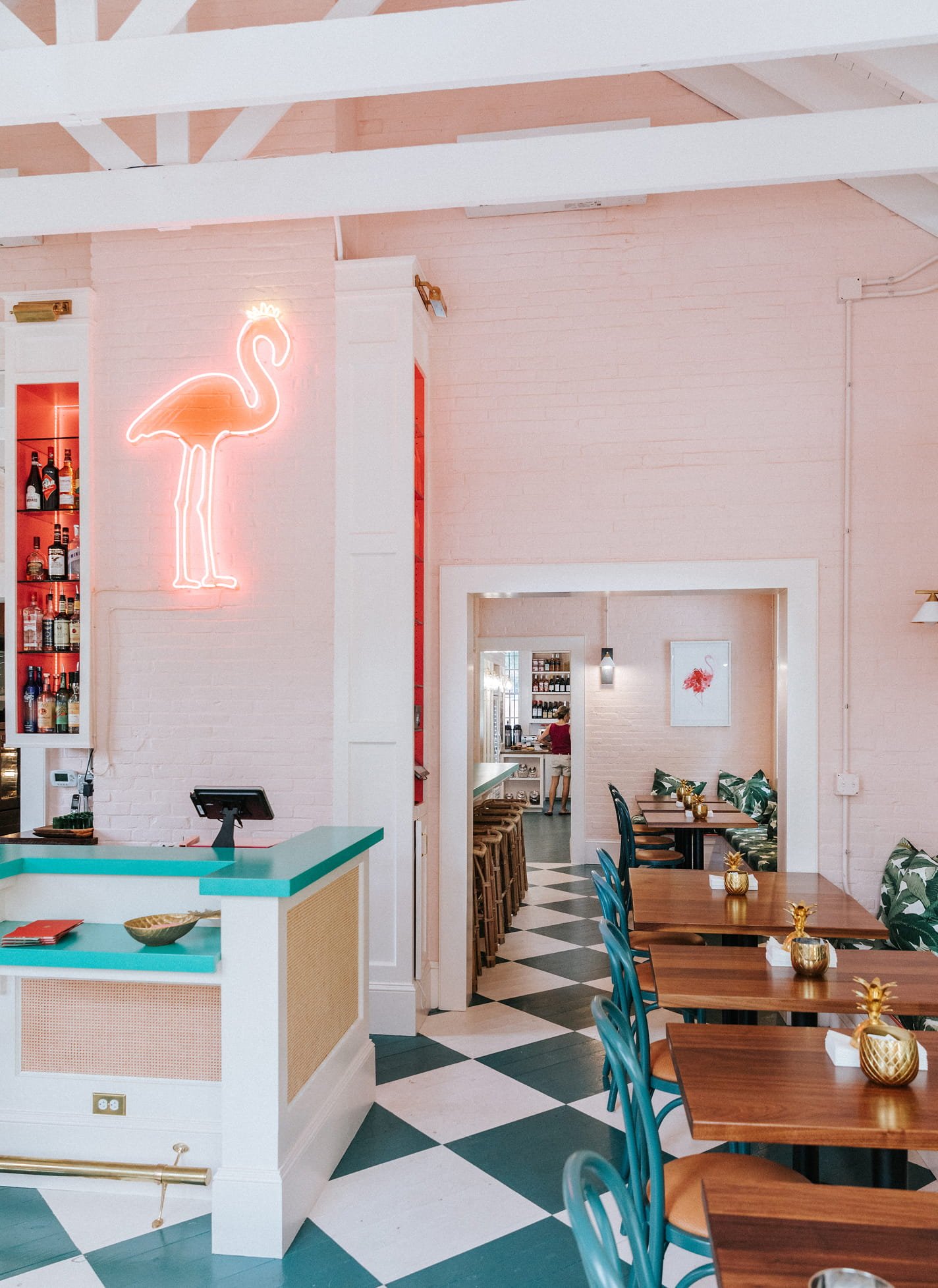
DESIGN
The design process was highly collaborative and client-focused, shaped around the restaurateurs’ vision of a retro resort escape. As part of the wider creative development, the studio interpreted the original concept through the lens of vintage postcards and travel posters. The design team explored not only the spirit of Florida resorts, but also destinations across the Caribbean, Europe, and the Mediterranean, ultimately creating an interior that transports guests to a bright, happy place: friendly, relaxed, and sun-soaked.
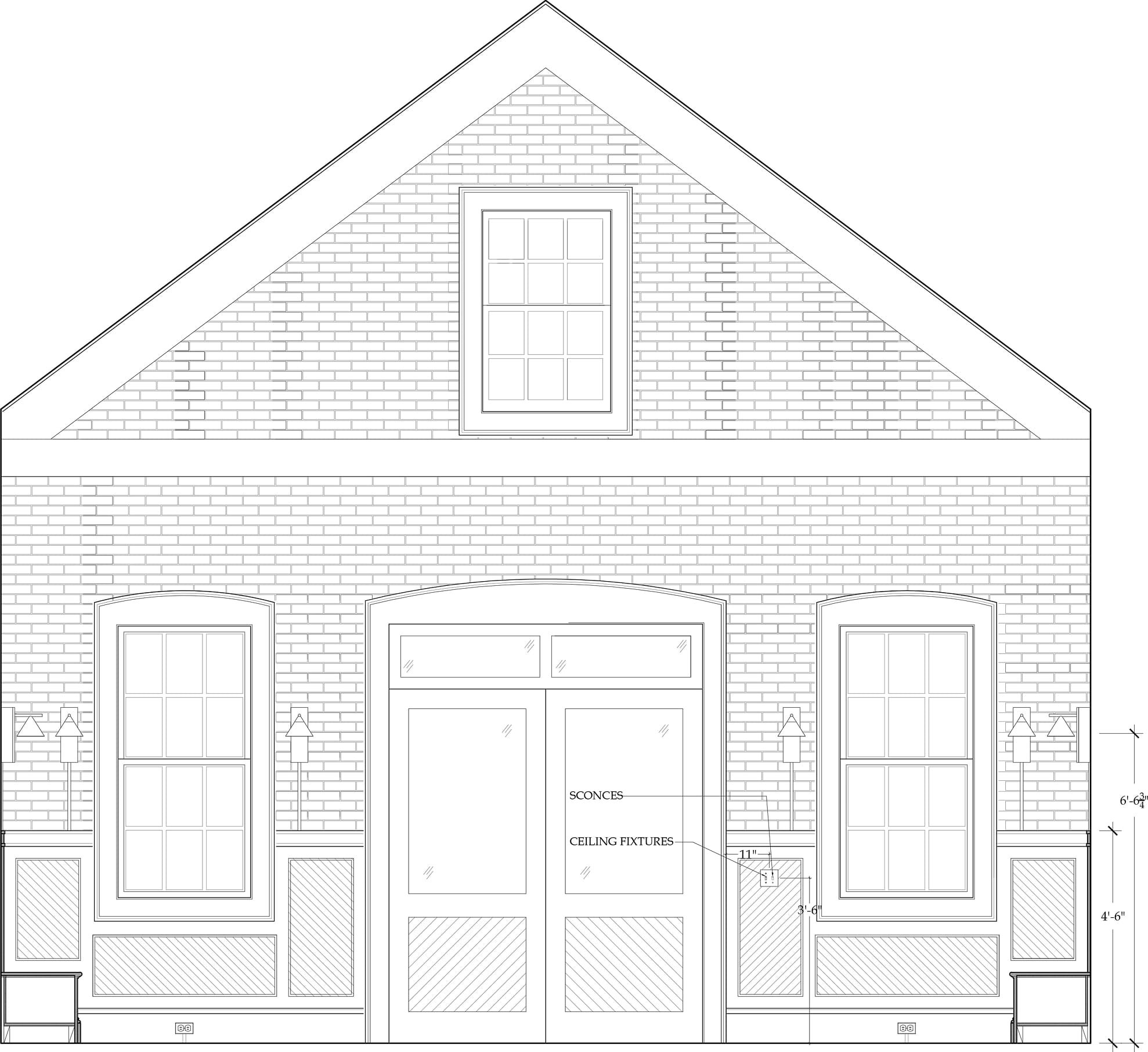
Located on a Maine island off the southern coast, and with the added responsibility of working sensitively within a historic structure, logistical constraints were reframed as opportunities. The project’s setting, an exclusive residential enclave, informed the studio’s restrained exterior façade restoration, ensuring it aligned with local architectural traditions. Solutions were developed in respect of the discreet way of life and aesthetic sensibilities of the island, while carefully navigating planning restrictions.
Given the cost and complexity of transportation, along with building limitations, all elements were designed to be broken down and reassembled or constructed on the island. Existing wood floors were painted as a deliberate nod to casual, resort-style living. Materials and finishes were specified for durability, able to withstand humid, salt-laden summers and harsh winters. Polished concrete, quietly robust and easily customizable, was selected for key areas in the client’s preferred shade of green. Brass, traditionally used on yachts and in coastal environments for its resistance to corrosion, was left to age naturally, developing a soft patina that adds a layer of understated elegance. Brass and gold tones are woven throughout the space, offsetting the cooler pink and teal palette.
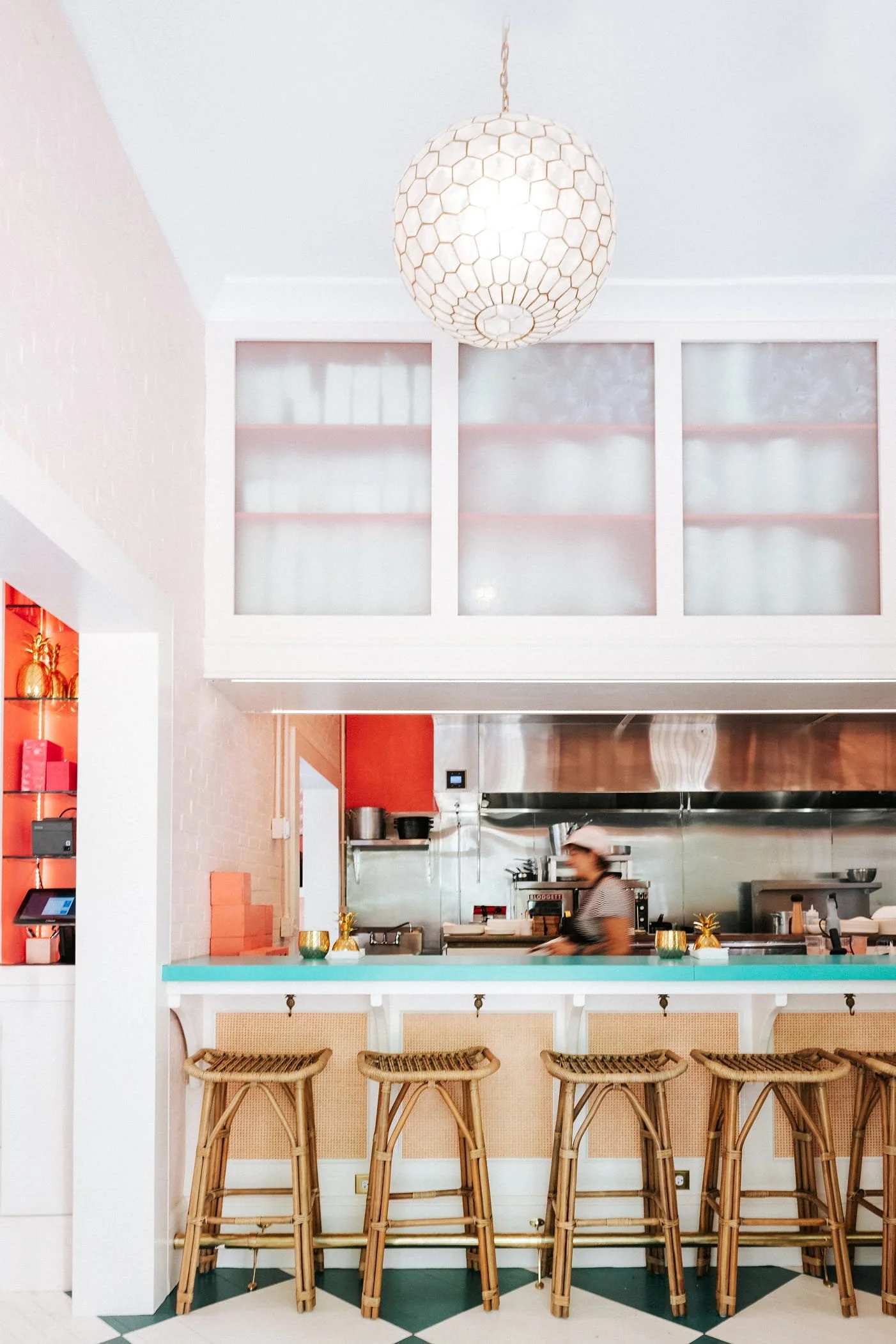
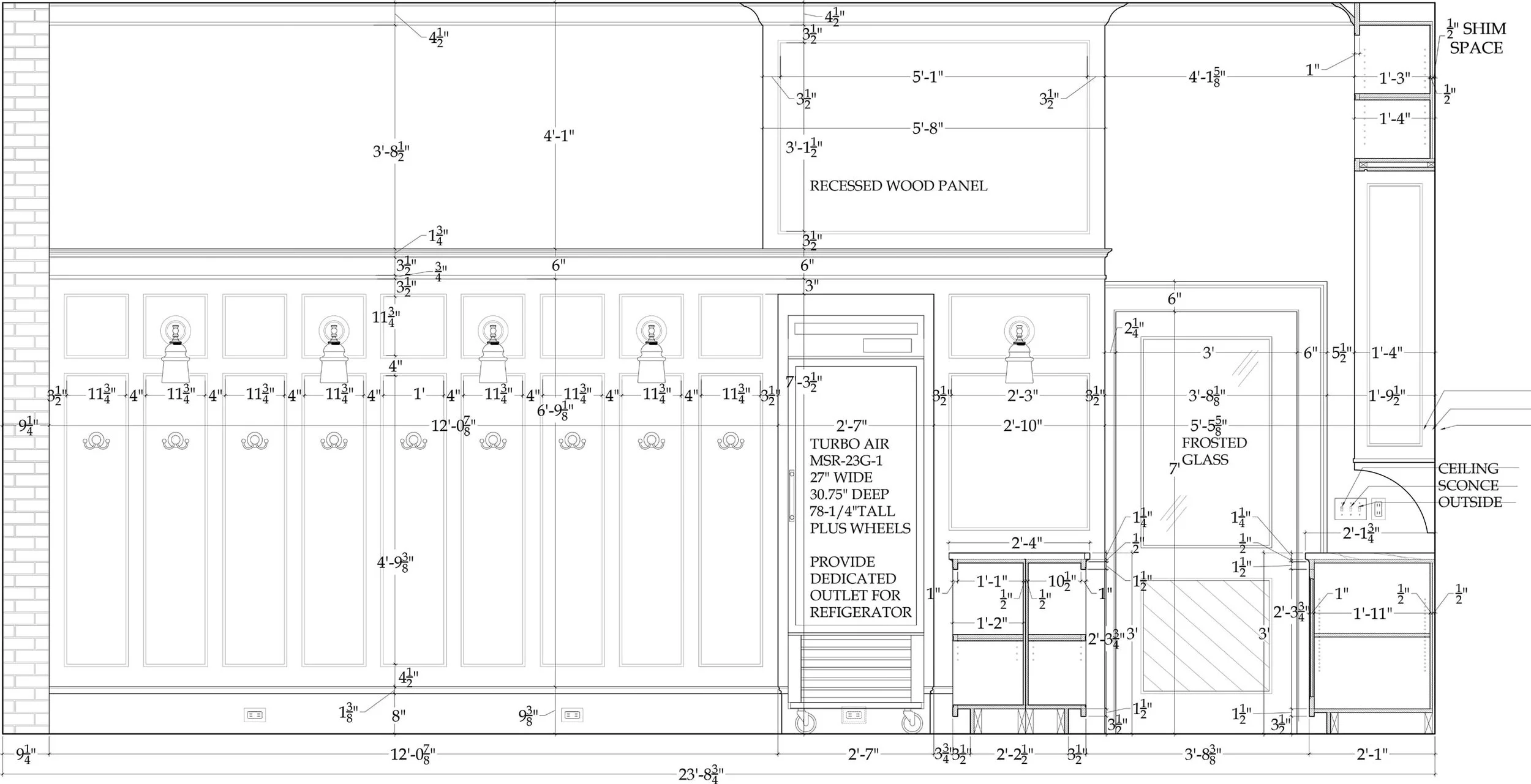
With no possibility for physical expansion, access limited to existing doors and windows, and minimal storage available, limitations were approached creatively. Storage was integrated into the architecture of the space, doubling as decorative display while delivering essential functionality. The restaurant also needed to incorporate a small shop—replacing the former general store—as well as an ice cream counter serving the local community with ice cream, muffins, and coffee.
The finished restaurant delivers exactly what the client envisioned: a recognizable yet imagined link to warmer latitudes, tapping into collective holiday memories. The design presents a cohesive visual narrative while honoring the original building. The team has created a joyful surprise within a historic envelope, one that gently subverts expectations of both traditional Maine interiors and military architecture. Every decision was carefully considered. The restaurant is both charming and highly functional, with an atmosphere that puts people instantly at ease, much like an escapist vacation.